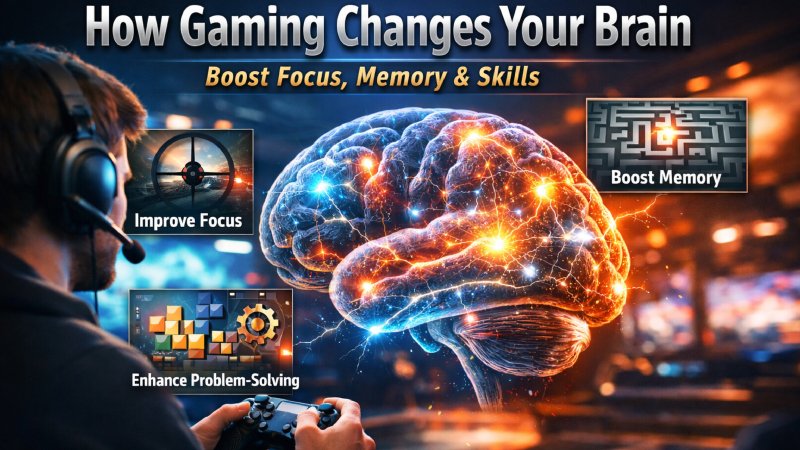
In the last few decades, video games have gone from being niche entertainment to a dominant cultural force. According to industry data, over 3 billion people worldwide play video games in some form — that’s nearly half the global population. From mobile apps to blockbuster console titles and competitive esports, how gaming affects the brain bfnctutorials has become woven into daily life. But as games have grown more advanced, so too has curiosity about their effects on the human brain.
Some people view gaming as harmless fun, others see it as a waste of time, and a smaller group fears that it may even be harmful. But the truth is much more balanced and fascinating. Scientific research shows that gaming influences the brain in both positive and negative ways — reshaping neural pathways, enhancing cognitive skills, and affecting emotions and behavior. This article explores how gaming affects the brain bfnctutorials — what happens inside your head when you play, whether those changes are beneficial or risky, and how to find a healthy balance.
The Brain on Games: What Happens Neurologically During Play
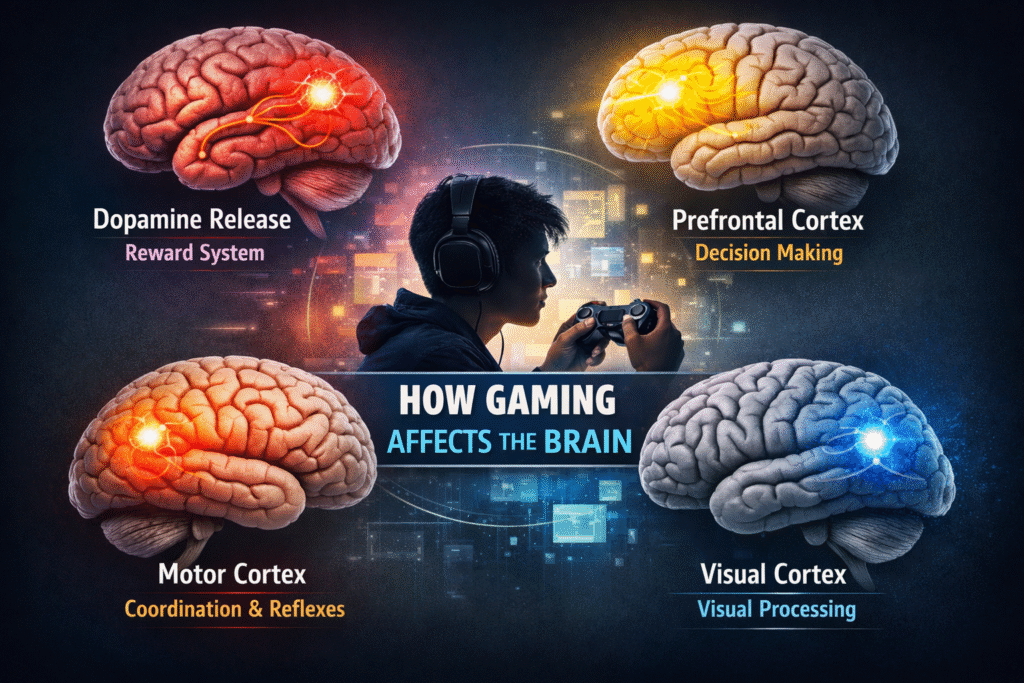
When you start a video game, your brain becomes instantly active in ways that differ from passive activities like watching TV. Gaming requires processing sensory input, making decisions under pressure, tracking moving objects, and responding quickly, all of which engage multiple brain systems simultaneously.
At a neurological level, gaming stimulates:
-
Neuroplasticity — the brain’s ability to reorganize itself based on experience
-
Dopaminergic pathways — neural circuits tied to reward and motivation
-
Executive function networks — areas involved in planning, attention, and decision-making
In short, gaming doesn’t just entertain your brain — it challenges and reshapes it.
Cognitive Benefits: Sharpening the Mind Through Play
One of the most well‑documented effects of how gaming affects the brain bfnctutorials is its influence on cognitive abilities. Although not all games have the same impact, many genres — especially action, puzzle, strategy, and simulation titles — have measurable benefits on several key mental skills.
Improved Attention and Focus
Fast‑paced games require players to monitor a lot of information at once — enemies, timers, indicators, and objectives — and respond to the most important stimuli. Over time, this trains the brain to:
-
Prioritize relevant information
-
Maintain attention despite distractions
-
Switch focus efficiently when needed
Gamers often outperform non‑gamers on tests of selective attention, which is the ability to focus on important tasks while ignoring irrelevant data.
Faster Processing Speed
Action games are notorious for demanding split‑second responses. Whether you’re dodging an attack, targeting an opponent, or reacting to environmental changes, your brain must process visual and auditory information quickly and accurately. This repeated stimulation can strengthen processing speed, meaning gamers can interpret and act on information faster than average.
Enhanced Problem‑Solving and Strategic Thinking
Games like strategy titles, role‑playing games (RPGs), and puzzles naturally involve planning, resource management, and adapting to complex systems. These mental challenges help develop:
-
Long‑term planning skills
-
Pattern recognition
-
Logical reasoning
-
Adaptive thinking
Gamers often learn to anticipate outcomes, weigh risks, and adjust strategies — skills that translate well beyond gaming into real life.
Spatial Skills and Memory
Games with rich three‑dimensional environments — from open‑world titles to first‑person shooters — stimulate regions of the brain associated with spatial navigation and memory. Frequent players may develop better awareness of spatial relations and stronger working memory, which is used to hold and manipulate information in the mind.
Emotional and Social Impact of Gaming
While much attention focuses on cognitive effects, gaming also plays a significant role in shaping emotions and social interactions.
Stress Relief and Emotional Regulation
For many people, how gaming affects the brain bfnctutorials serves as a way to unwind and decompress. Completing objectives, overcoming challenges, and advancing through levels can produce feelings of accomplishment and satisfaction. Games that offer immersive worlds or enjoyable narratives can also provide a mental break from stress or worry.
In moderation, gaming can help with emotional regulation — offering:
-
A temporary escape from daily pressures
-
Opportunities to practice frustration tolerance
-
Safe spaces to try new strategies and learn from failure
Social Connection and Teamwork
Online multiplayer games have transformed gaming into a social activity. Whether coordinating with teammates, forming guilds, or chatting with friends, gaming provides opportunities for communication, cooperation, and shared goals. These interactions can strengthen:
-
Social bonds
-
Communication skills
-
Teamwork and leadership
-
Sense of belonging
Studies have shown that for some players, online gaming communities provide meaningful social connections that extend into real life.
Risks and Challenges: Negative Effects of Excessive Gaming
Despite many benefits, gaming isn’t without risks, especially when consumed in excess or without balance. Understanding the potential downsides can help players make healthier choices.
Gaming Addiction and Compulsive Behavior
One of the most talked‑about concerns is gaming addiction — a pattern of excessive game use that interferes with daily life and responsibilities. The World Health Organization recognizes Gaming Disorder as a behavioral condition characterized by:
-
Loss of control over gaming habits
-
Prioritizing gaming over other activities
-
Continued gaming despite negative consequences
This is most likely when gaming becomes the primary source of reward or escape, replacing real‑world social interactions and obligations.
Sleep Disruption
Late‑night gaming sessions can interfere with your body’s natural sleep cycle. The combination of screen exposure, adrenaline, and immersive engagement makes it harder to wind down, potentially leading to insufficient or poor‑quality sleep. Chronic sleep disruption can negatively affect memory, mood, and overall health.
Increased Aggression? A Complex Debate
The relationship between violent games and aggression has attracted controversy. Some studies suggest short‑term increases in aggressive thoughts or feelings after playing violent games, while others find no long‑term link to real‑world aggression. Most experts agree that context matters — personal traits, environment, and broader media exposure influence outcomes more than game content alone.
Physical Health Concerns
Long gaming sessions often involve sitting for extended periods, which may contribute to:
-
Poor posture
-
Eye strain or headaches
-
Reduced physical activity
These factors don’t directly affect the brain but can influence overall well‑being, which in turn impacts mood, energy, and cognitive function.
Gaming and the Developing Brain
One of the most important areas of study is how gaming affects young people, whose brains are still developing. Children and adolescents may be more susceptible to the effects of gaming — both positive and negative.
Beneficial Impact on Learning Skills
When balanced with other activities, gaming can support learning by:
-
Enhancing reading comprehension (through narrative games)
-
Encouraging math and logical reasoning (in strategy titles)
-
Improving memory and goal planning
Educational games leverage these strengths to make learning interactive and fun.
Risk of Overuse in Youth
At the same time, excessive gaming in children may:
-
Displace physical play and social interaction
-
Affect sleep patterns
-
Limit time spent on reading or academic work
Parents and guardians should set reasonable limits, encourage diverse activities, and choose age‑appropriate games that promote learning and creativity.
How to Game in a Healthy, Brain‑Friendly Way
Gaming doesn’t have to be harmful, and it may even be beneficial when approached thoughtfully. Here are practical tips to make sure your how gaming affects the brain bfnctutorials habits support brain health:
1. Set Time Limits
Structure your gaming so it doesn’t override work, sleep, or social time. Use built‑in screen time tools if needed.
2. Take Regular Breaks
Every 45‑60 minutes, stand up, stretch, look away from screens, and hydrate. Breaks reduce eye strain and improve focus.
3. Choose Games That Challenge Your Mind
Not all games are created equal. Strategy, puzzle, simulation, and narrative games are more likely to boost cognitive skills than purely repetitive titles.
4. Stay Physically Active
Balance gaming with exercise. Physical activity supports overall brain health, mood, and energy.
5. Play Socially When Possible
Cooperative gaming can strengthen communication skills and build friendships. Just remember to be mindful of online etiquette and safety.
6. Prioritize Sleep
Avoid gaming immediately before bedtime. Create a calming evening routine to support restful sleep.
The Future of Gaming and the Brain
As technology evolves, so does the potential impact of how gaming affects the brain bfnctutorials. Virtual reality (VR), augmented reality (AR), and adaptive AI are creating experiences that are more immersive and cognitively demanding than ever before. These advancements may shape the brain in new ways — potentially enhancing learning, empathy, and sensory integration.
Even more promising is the use of “serious games” in fields like education, health therapy, and rehabilitation. Games are being developed to:
-
Support mental health treatment
-
Aid stroke recovery
-
Teach complex skills in engaging ways
In other words, gaming may soon be recognized as not just entertainment but a tool for cognitive and social growth.
Conclusion
Gaming is more than just a pastime — it’s an activity that actively shapes the brain. It can enhance attention, processing speed, memory, and problem‑solving abilities while providing emotional satisfaction and social connection. That said, like any powerful tool, how gaming affects the brain bfnctutorials has risks when overused or approached without balance.
The most important takeaway is that gaming is not inherently good or bad. Its effects depend largely on how it’s used, who is playing, and in what context. With mindful habits and healthy limits, gaming can be a positive and enriching part of life.
Whether you’re a casual player, a competitive gamer, a parent, or an educator, understanding how gaming affects the brain helps you make smarter, healthier choices — turning play into growth rather than distraction.