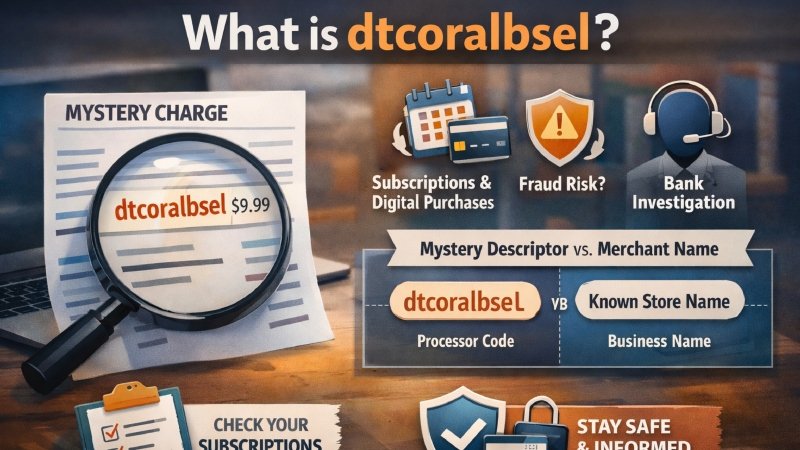
If you are a U.S. bank or credit card user, seeing dtcoralbsel on your statement can be confusing. Many individuals notice this code unexpectedly and wonder if it signals fraud, a subscription, or a legitimate transaction. The term is not a merchant name but a billing descriptor used by payment processors to track and log payments efficiently. Understanding what dtcoralbsel represents is critical for managing finances and ensuring account security. This article explains the meaning, typical causes, best practices for individuals and technical teams, and actionable steps to handle these charges confidently.
What Does dtcoralbsel Mean?
dtcoralbsel is a standardized internal label assigned by banks or third-party payment processors. It identifies a transaction without displaying the actual merchant name. Often, it appears for recurring subscription payments, trial conversions to paid plans, or digital purchases. The descriptor is purely technical and intended for processing and reconciliation rather than customer recognition. While this practice increases banking efficiency, it can cause anxiety for account holders unfamiliar with coded billing labels.

Why dtcoralbsel Shows Up Instead of the Merchant Name
There are several reasons why your bank statement may show dtcoralbsel instead of a recognizable business name. One key reason is the use of third-party payment processors that handle multiple merchants through a single gateway. In these cases, the processor’s internal code, like dtcoralbsel, appears on statements rather than the actual merchant. Character limits imposed by banking systems also force truncation of longer merchant names, resulting in cryptic codes. Additionally, some platforms operate under parent companies or intermediaries whose legal names are used for payment processing. For U.S. users, this often appears in online subscriptions, app-based services, and digital platforms.
Common Scenarios Linked to dtcoralbsel
The presence of dtcoralbsel is usually linked to legitimate financial activity rather than unauthorized transactions. In the U.S., the most common occurrences include subscription renewals for streaming services, software, or membership platforms. One-time digital purchases, in-app upgrades, and trial period conversions can also trigger the descriptor. Users often forget initial authorizations, which can make the charge appear unexpected. While unusual, these entries are standard in digital finance systems and rarely indicate fraud if the user recognizes the source.
Pros and Cons of dtcoralbsel
Pros:
-
Enhances transaction processing speed and ensures accurate payment tracking.
-
Allows banks and payment processors to reconcile payments efficiently.
-
Supports secure handling of recurring transactions and subscriptions.
-
Helps technical teams simplify backend tracking and auditing across multiple platforms.
Cons:
-
Can appear confusing or cryptic for individual users unfamiliar with processor codes.
-
May delay recognition of unauthorized charges, increasing financial risk.
-
Can complicate account reconciliation for less experienced users.
-
Requires extra effort to match descriptors with actual merchants for clarity.
Best Practices for Individuals
U.S. account holders should adopt a proactive approach to prevent confusion and identify unusual charges. Start by reviewing all subscriptions and recent digital purchases regularly. Match bank statement amounts with receipts and confirmation emails. Keep an organized record of authorized family or household users on shared accounts. Setting reminders for subscription renewals and canceling unused trials before they auto-renew can minimize surprises. Additionally, monitoring digital wallet histories, app store transactions, and recurring billing alerts enhances awareness.
Best Practices for Technical Teams
For technical teams managing payments, understanding dtcoralbsel is essential for reconciliation and auditing. Ensure all merchant and processor codes are mapped correctly in internal systems. Regularly cross-check backend descriptors with front-facing merchant names to maintain transparency in reporting. Establish alerts for anomalies, such as repeated or unusual charge patterns, to detect potential unauthorized transactions. Clear documentation of internal payment codes and proactive communication with customer support teams ensures faster resolution of user queries.
Comparison Table: dtcoralbsel vs Other Common Descriptors
| Descriptor | Common Use Case | User Impact | Notes |
|---|---|---|---|
| dtcoralbsel | Subscription, digital purchase | Can cause confusion | Processor code, not merchant name |
| XYZPAY | E-commerce transactions | Generally clear | Merchant name often recognizable |
| ABCSUBS | Membership renewals | Sometimes cryptic | May require cross-check with receipts |
| PAYPRO | Digital services | Clear if mapped | Backend label, used for multiple merchants |
This table helps both individuals and technical teams distinguish between common statement descriptors and understand potential sources of charges.
How to Investigate dtcoralbsel Charges
Step-by-step investigation can clarify the nature of dtcoralbsel. Begin by reviewing your transaction history and identifying any subscriptions, trial conversions, or digital purchases that match the amount. Search email inboxes for receipts or confirmation messages around the transaction date. Verify charges made by authorized household members if accounts are shared. If uncertainty persists, contact your bank to request the merchant name and payment processor details. For technical teams, reconciling the descriptor against internal payment mappings provides clarity and allows early detection of anomalies.
Actionable Tips to Prevent Confusion
Maintaining financial clarity requires consistent habits. Track all active subscriptions, and review bank statements at least monthly. Cancel unused trials before they auto-renew. Separate personal and subscription cards where feasible, and store digital purchase records in organized folders. For technical teams, implement alerts for new or recurring descriptors and maintain updated logs mapping processor codes to merchant names. These practices reduce stress and prevent unauthorized charges from going unnoticed.
FAQs About dtcoralbsel
1. Can dtcoralbsel indicate fraud?
While usually legitimate, any charge that cannot be traced should be verified with your bank immediately.
2. Why does dtcoralbsel appear repeatedly?
It is often tied to recurring subscriptions or auto-renewals, showing each time a payment is processed.
3. Should I cancel my card if I see dtcoralbsel?
Canceling is unnecessary if you can verify the charge. Only consider replacement if it is unauthorized.
4. How can I track dtcoralbsel charges efficiently?
Maintain records of subscriptions, receipts, and authorized users. Regularly reconcile bank statements.
5. Is dtcoralbsel unique to the U.S.?
While the code itself may vary internationally, the concept of processor descriptors is standard globally.
6. What should technical teams do to manage dtcoralbsel?
Map all backend descriptors to merchant names, implement anomaly alerts, and document payment processor codes clearly.
Conclusion: Summary and Safety Reminder
In summary, dtcoralbsel is a technical billing descriptor that often appears on U.S. bank and credit card statements due to third-party payment processing. While it may seem cryptic, it generally represents legitimate transactions like subscriptions, trial conversions, or digital purchases. Both individuals and technical teams benefit from organized financial tracking, proactive investigation, and structured monitoring. Always verify unfamiliar charges promptly and maintain clear records to ensure safety and prevent unauthorized transactions. Staying vigilant and informed transforms confusing descriptors like dtcoralbsel into manageable elements of modern finance.